
If you have played a modern board game in the last twenty years, you have almost certainly placed a worker. It is one of the most common mechanics on the shelf, and one of the easiest to teach — the rules fit in two sentences. What takes longer to explain is why those two sentences produce so much agony.
The one rule that makes it work
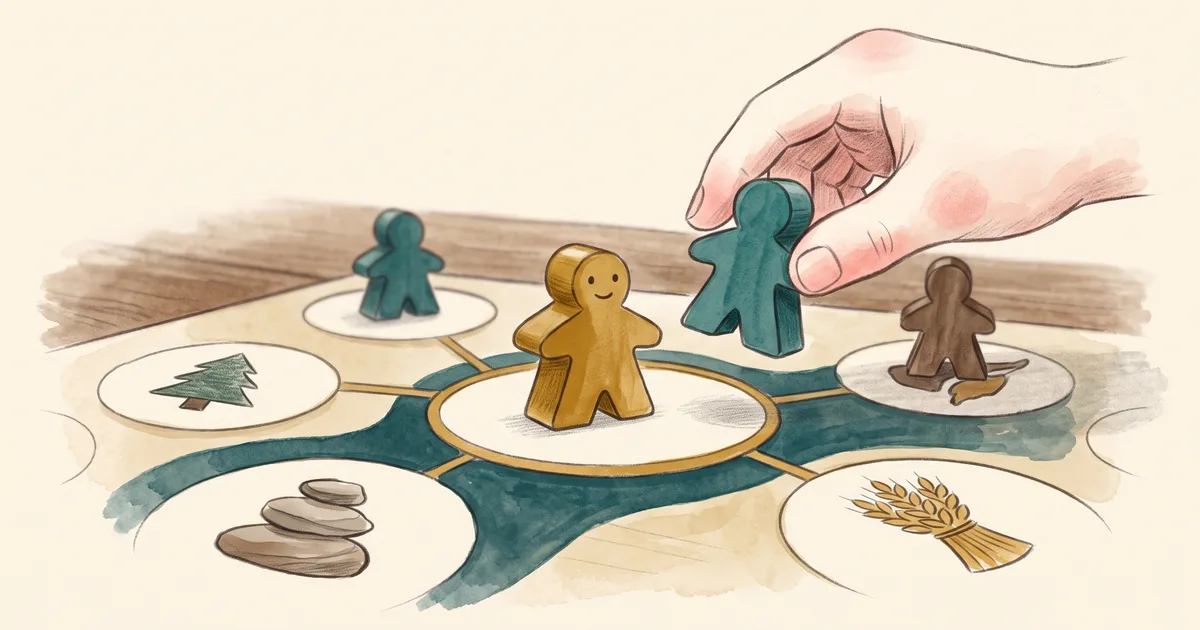
You get a handful of pieces. Workers, meeples, little wooden people — the game will have its own name for them, but they all do the same job.
The board is covered in spaces, and every space does something for you: take three wood, bake bread, hire a card, move up a track, score a point. On your turn you put one worker on one space and you take what that space offers.
Then comes the rule that makes the whole thing tick. That space is now closed. For the rest of the round, nobody can use it — not your opponents, and not you again. When everyone's workers are out, the round ends, everyone collects their people, and the board opens up fresh.
That is the entire mechanic. Everything else a worker placement game does is built on top of those two sentences.
What a turn actually looks like
The turn itself is over in seconds. You pick up a worker, you put it down, you take the reward. There is no dice roll to wait for and usually no card to flip. On paper it is the calmest turn in board gaming.
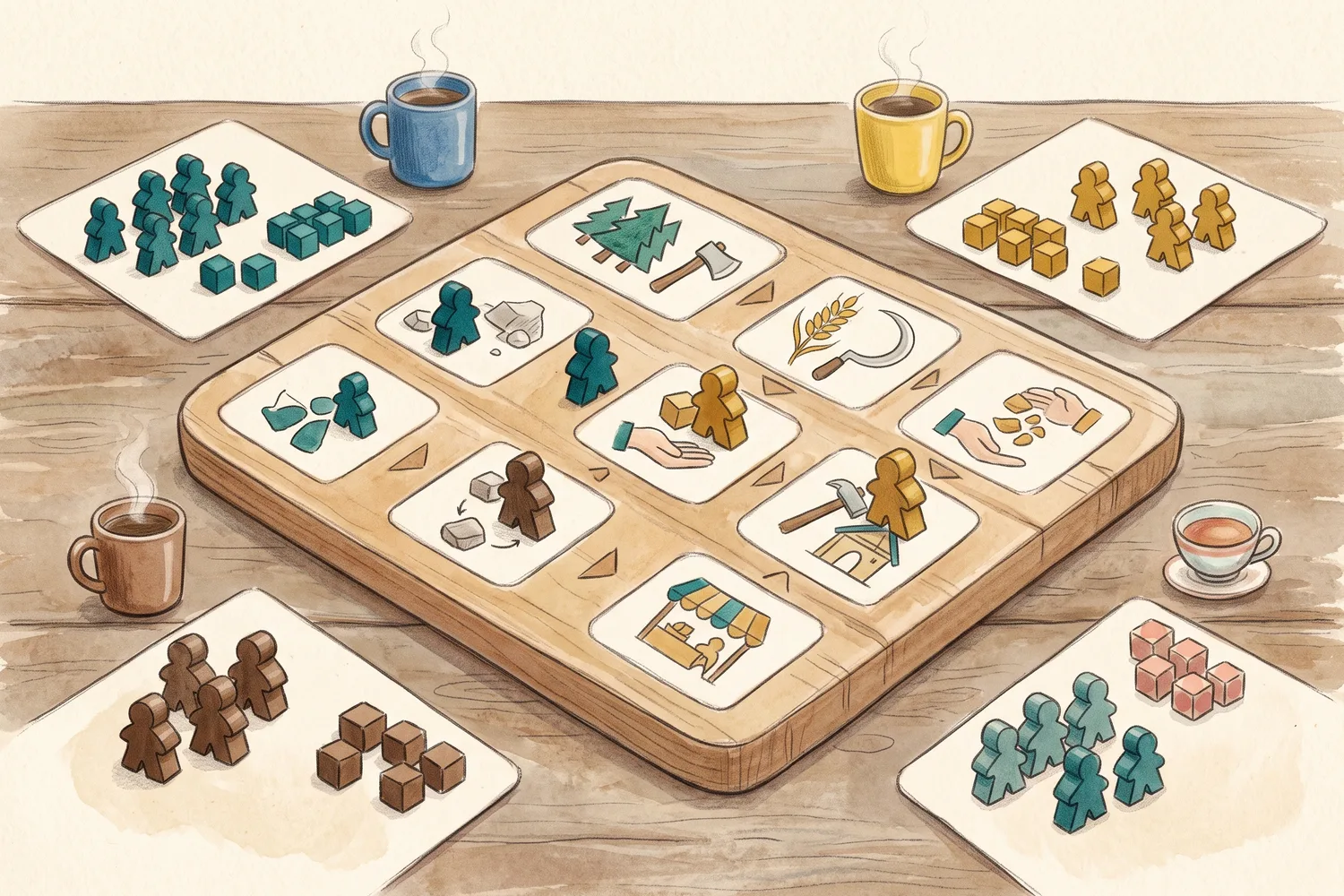
The thinking happens before your hand moves. You look at the board and you can see, right now, exactly what everyone wants — because everyone is reading the same spaces you are. The clay you need for your kiln is sitting in plain view, and so is the fact that the player to your left has been collecting clay all game.
So the question is never really "what do I want?" It is "what do I want that I can still get in three turns' time, and what will be gone if I wait?"
Why the blocking is the whole game
Take that closing rule away and worker placement collapses into a shopping list. Everybody would simply take the best thing available, in order, until the round ended. Nobody would ever have to choose.
The blocking is what turns a shopping list into a game. It means:
- Your best move is rarely the obvious one. Sometimes you take a mediocre space early because you know it will be taken, and leave the good one because nobody else can use it yet.
- Turn order matters enormously. Going first is worth real money, which is why most games make first player a resource you have to spend a worker to claim.
- You interact without ever attacking anyone. Nothing in the box lets you burn down my farm. You just stood where I was going to stand, which is somehow worse.
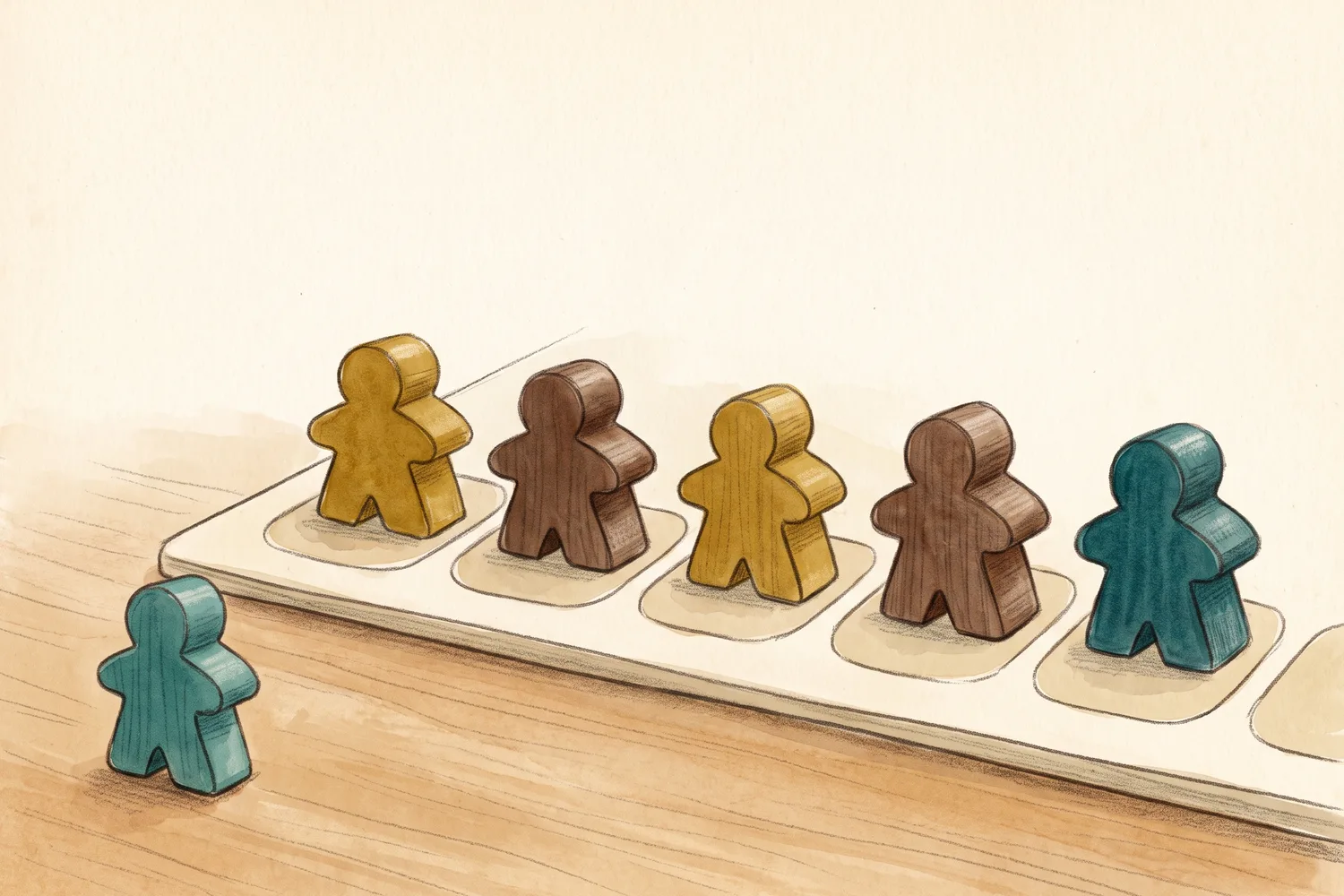
That last point is why worker placement travels so well. It is a genuinely competitive, tense mechanic that never asks anyone to be mean on purpose — which makes it a safe bet for a mixed table.
The twists designers add
Almost no game ships the plain version any more. The good ones bend one dial:
- Place and retrieve. In Raiders of the North Sea, you put a worker down and pick a different one up in the same turn, so the board never fully empties and your options shift under you constantly.
- Bumping. Some games let you take an occupied space by paying a price, which softens the frustration for newer players — you are never fully locked out, just taxed.
- Workers that change. Champions of Midgard gives workers different strengths. Tzolk'in: The Mayan Calendar puts them on turning gears, so the longer you leave one out, the better its reward gets — and the longer you go without it.
- A second engine underneath. Dune: Imperium hands you a deck of cards that decides which spaces your workers may even visit, welding deck-building onto the mechanic.
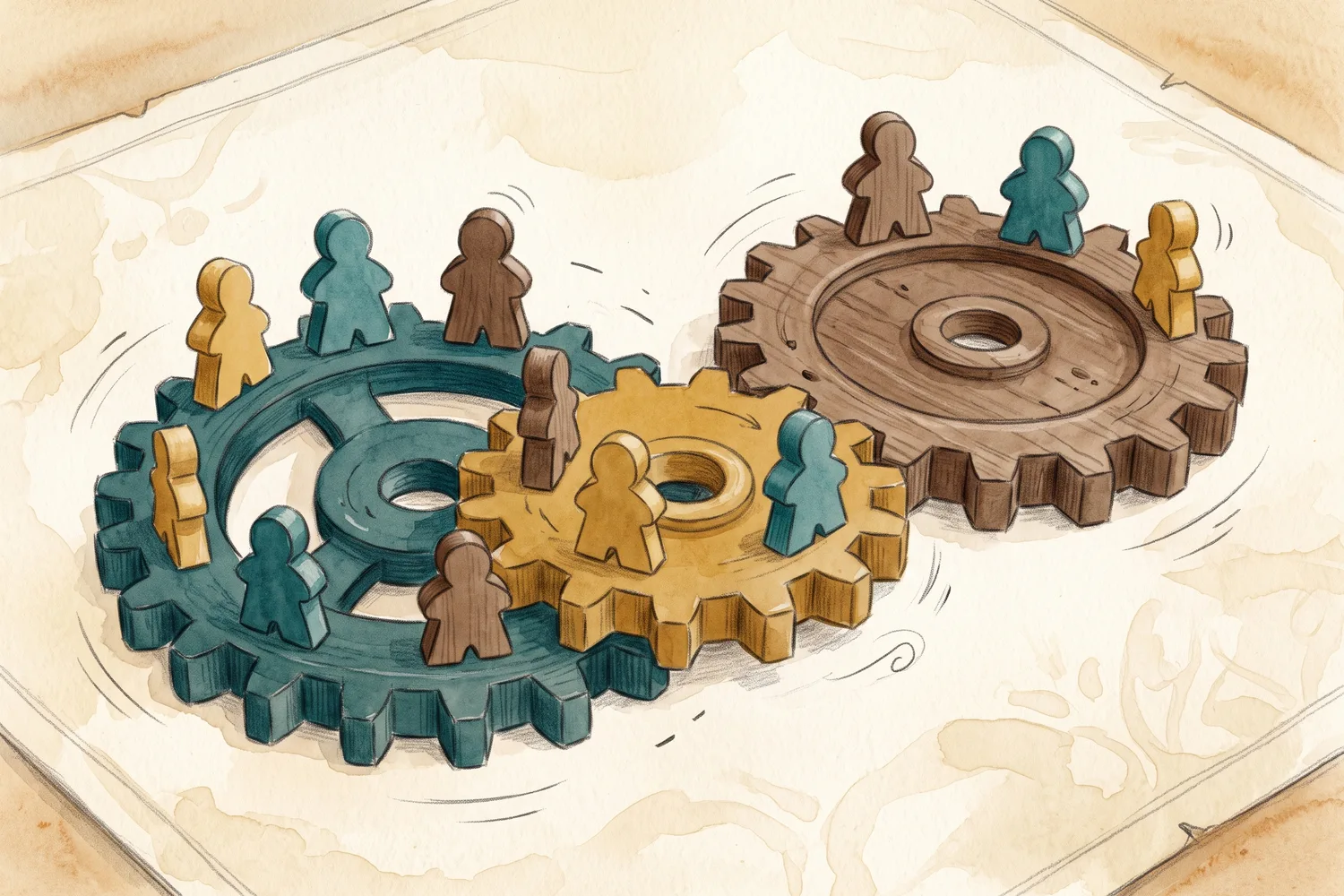
If a game is described to you as "worker placement, but…", the bit after the "but" is the part worth listening to.
Where to start
If you want to feel the mechanic in its cleanest form, Stone Age is still the best teacher on the shelf — an hour, a clear board, and every decision visible. Viticulture is the next step up and possibly the friendliest mid-weight game ever made about a vineyard.
For a table that likes pretty things, Everdell hides a proper worker placement game under one of the best-looking boards in print. And when you are ready for the mechanic at full strength, Agricola is where it grew up: not enough workers, not enough food, and every space you wanted taken by somebody else.
Our library has 333 games tagged worker placement if you want to browse the whole shelf — or read our ranked pick of the ten best worker placement games.